The Waste Management Law: An Opportunity to Direct More Waste Toward Environmentally Efficient Treatment
Auto Repair Shops, Waste Motor Oils, and the Need for a More Efficient and Accessible Waste Management System
Experience from auto repair shops shows that there are numerous systemic shortcomings, particularly in the management of hazardous waste - the most sensitive and environmentally risky category of waste. In their day-to-day operations, auto repair shops generate significant quantities of hazardous waste, including waste motor oils, antifreeze, oil-contaminated filters and packaging, batteries and accumulators, as well as certain non-hazardous waste streams such as scrap metal in the form of used vehicle parts.
Underdeveloped Waste Management System for Auto Repair Shops and Road Transport Operators
One of the key problems is the lack of awareness of how important it is that a major waste stream from auto repair shops be managed in an environmentally compliant manner - namely, waste motor oil. One of the largest sources of environmental pollution in the Republic of Serbia is the use of waste motor oil for heating in individual households. The combustion of waste motor oil releases extremely hazardous pollutants into the air and, combined with the widespread use of other environmentally unacceptable fuels, places Serbia among the countries with the highest levels of air pollution in Europe.
Beyond the need for awareness-raising and education, there is also the problem of limited availability of adequate solutions for managing this waste stream. Currently available solutions are economically burdensome for auto repair shops, primarily because authorized waste motor oil collectors lack a sufficiently developed logistics network, making their services expensive. Collecting small quantities of waste from numerous small workshops in remote locations represents a logistical and cost challenge. Nevertheless, every kilogram of this waste is equally important and must be collected and removed from the environment.
The fact that out of approximately 40,000 tonnes of motor oil placed on the Serbian market annually, as much as 38,000 tonnes remain outside legal waste management streams clearly demonstrates the inefficiency of the existing system.
There are two main routes for the treatment of waste motor oil: controlled incineration in cement kilns or waste incineration facilities, or export to refineries equipped with re-refining processes for motor oils, which represents the most environmentally sound solution.
A Plan for Developing a Sustainable Solution
Infrastructure has been established for the development of a dedicated operator that will provide an efficient logistics solution across the territory of the Republic of Serbia. Under this model, every auto repair shop or transport company would be regularly visited by a specialized vehicle that would collect waste motor oil, scrap metal (vehicle parts), filters, oil-contaminated cloths, and other types of waste.
Considering that the single operator would treat both waste motor oil and scrap metal/vehicle parts in its own facilities, significantly more cost-efficient waste management prices could be achieved for waste generators - namely, auto repair shops. It is expected that such a service will be available by the end of 2026, when the operator’s vehicle fleet is planned to cover the entire territory of Serbia.
Uncontrolled Retail Sales – The Root of the Problem
A particular challenge is the sale of products that become hazardous waste after use, primarily motor oils. Today, any individual can purchase these products without any restriction or obligation to properly dispose of the waste after use. Such practices hinder the development of a collection network capable of providing a sustainable environmental solution.
The result is alarming: in the Republic of Serbia, only about 5% of waste oil is collected under controlled conditions, while in well-regulated systems this figure can reach up to 60%. Therefore, it is necessary to introduce greater responsibility for retailers, restrict retail sales, and establish electronic tracking of the trade in these products.
Progress is inevitable, as there is no more time for postponement. The challenges must be addressed in order to increase, year by year, the share of waste oil collected under controlled conditions. Significant projects aimed at developing and improving the entire system are planned and will be implemented in parallel with the development of operators servicing the network of auto repair shops across Serbia.
End-of-Life Vehicles and the Grey Zone
The issue of end-of-life vehicles further burdens the system. Private individuals, who are most often the owners of old vehicles, face complex and costly procedures when handing them over to authorized operators. As a result, abandoned vehicles are frequently left in nature. Simplifying the handover procedure by reducing administrative requirements would represent a significant step forward.
All end-of-life vehicles represent a source of scrap metal that an operator could collect within the same contractual arrangement as waste motor oils, thus providing waste generators with a comprehensive solution. This approach would be more economically viable than requiring waste generators to manage these two waste streams separately in order to comply with legal obligations.
Finally, the issue of unregistered activities cannot be overlooked. Illegal auto repair shops and individuals handling hazardous waste without any oversight represent one of the largest sources of pollution. The current penalty policy for individuals is too lenient and lacks a sufficient deterrent effect.
Instead of a Conclusion
Further development of the Waste Management Law must focus on a clear allocation of responsibilities, reducing administrative and financial burdens for compliant businesses, and strengthening control over hazardous waste. Only in this way can environmental protection be ensured, the grey economy reduced, and a fairer and more sustainable waste management system established in the Republic of Serbia.
Until then, through the project “Improving the Management of End-of-Life Motor Vehicles in Serbia”, jointly financed by German development cooperation and the private partner Steel Impex and implemented with the support of NALED, we hope to contribute to overcoming some of the challenges outlined above - for the benefit of all of us who live here and depend on the environment, and who must and will reduce the amount of waste ending up in it.
Related Content
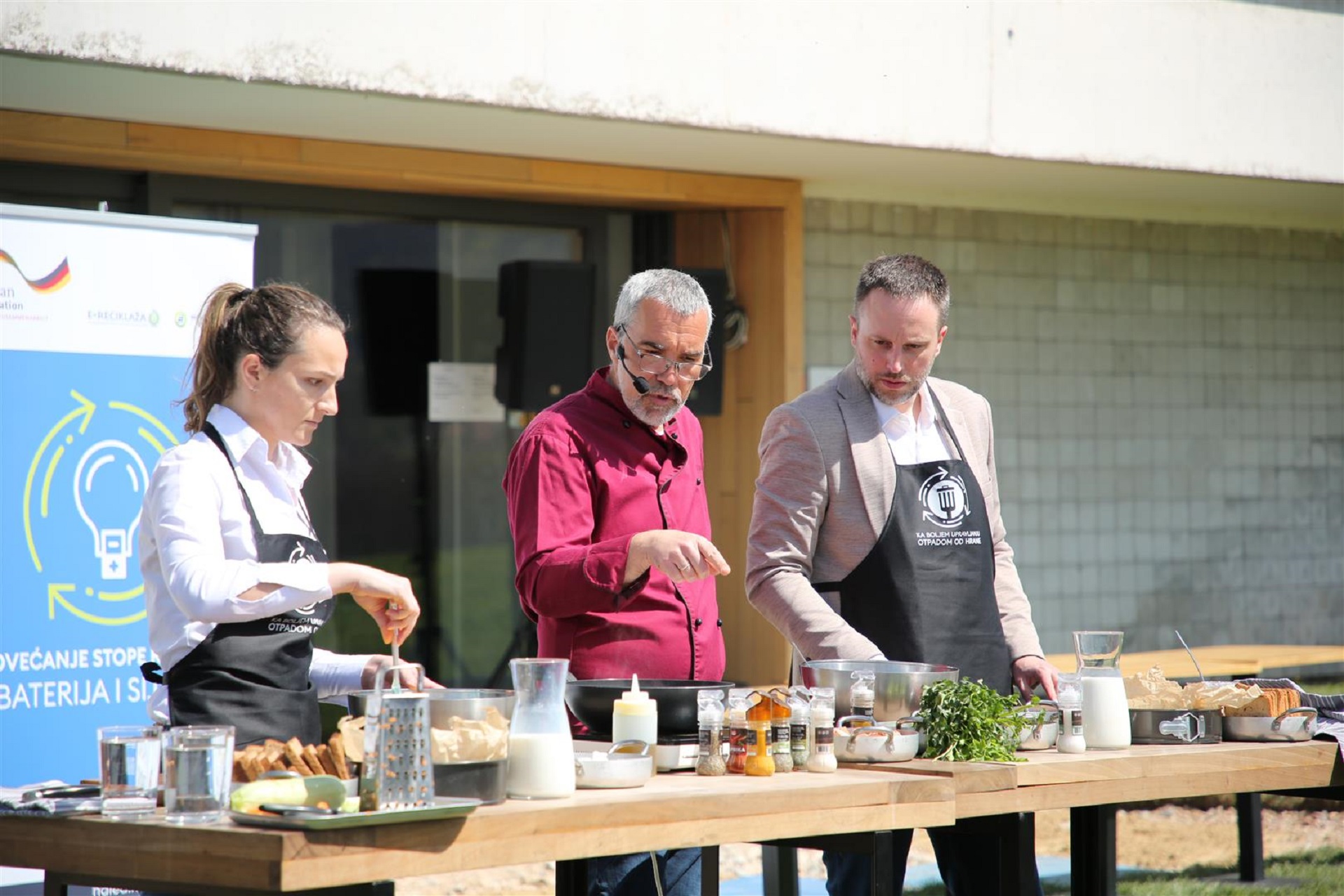
NALED, GIZ, and Esotron have collected 1,300 tons of food waste
14.04.2022
The response of large caterers to the challenge of collecting 1,000 tons of food...Read more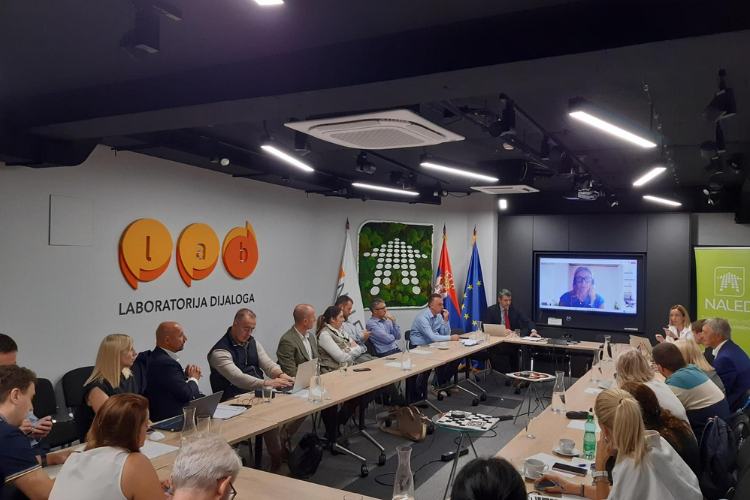
The process of amending the Law on Waste Management has begun
25.09.2025
More precisely defining the responsibilities of producers and users, improvement...Read moreThis website uses cookies to ensure the best user experience. By continuing to browse the site, you consent to the use of cookies.
CONTINUE LEARN MORE